
Industry Seat - Mark & Millie Slade
In Conversation with Mark & Millie Slade

Before there was Jara Beach Resort, there was a stretch of coastline, a beach hut called Lil Zanzibar, and two people who kept returning to the same place.
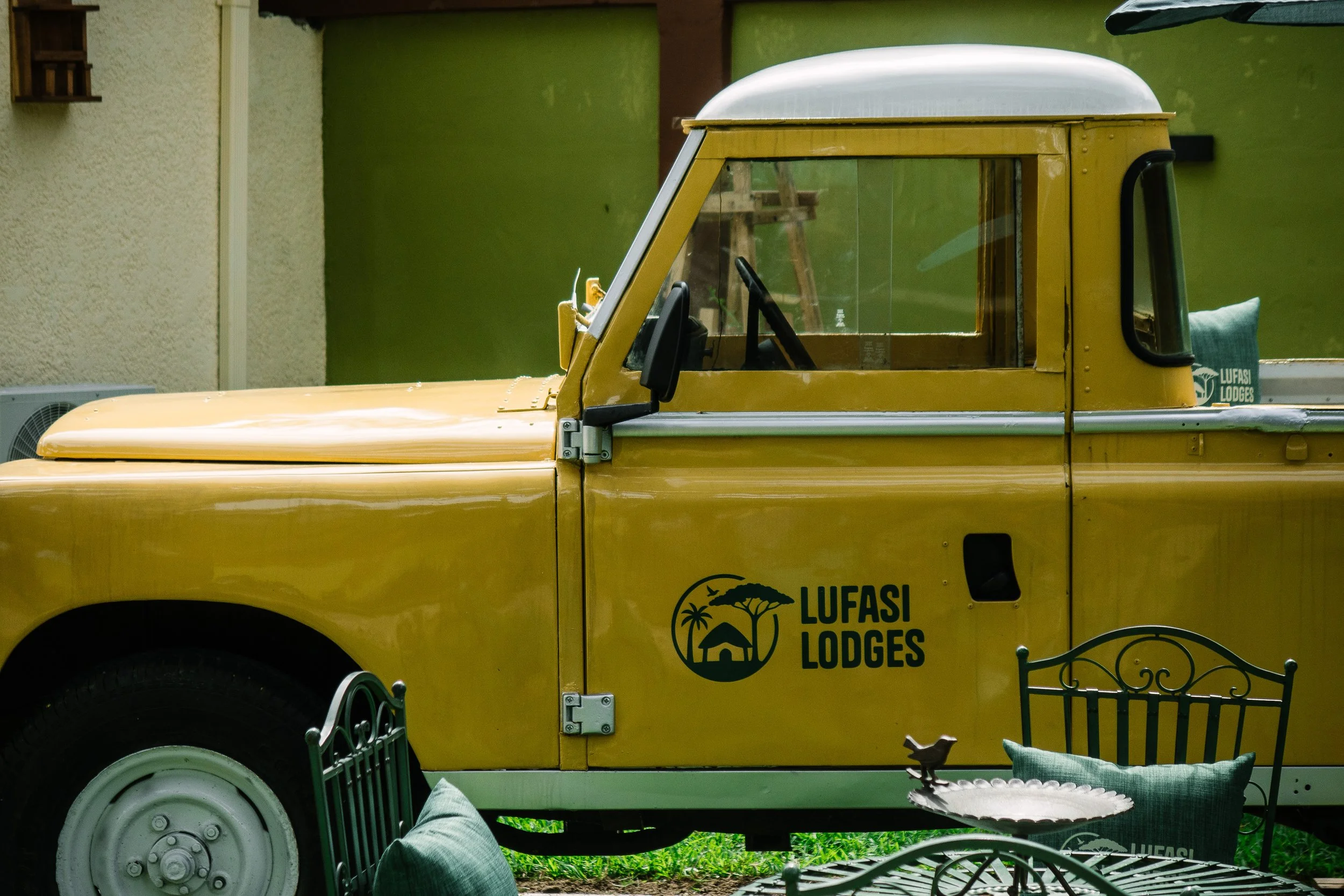
For Mark and Millie Slade, what began as a personal connection to the Lagos shoreline gradually became something larger: a belief that Nigeria deserved boutique hospitality experiences designed with the same care, character, and sense of escape found in the world's most memorable destinations. Six years later, that belief has grown into Little Company Nigeria, the group behind Jara Beach Resort and, more recently, Lufasi Lodges, a forest retreat offering a very different kind of getaway.
Yet beneath the growth lies an obsession with detail. From surviving the uncertainty of a pandemic-era launch to rethinking what world-class hospitality can look like in Nigeria, the Slades have built their businesses through a combination of conviction, consistency, and an unwillingness to compromise on the guest experience.
For this edition of Industry Seat, we sat down with the husband-and-wife founders to discuss resilience, expansion, wellness travel, and why the smallest details often matter most.
Most resort stories begin with a business plan. Yours begins with a beach hut you called Lil Zanzibar. Take us back to that period in 2016. What were you actually doing on that stretch of beach, and at what point did "this is a nice weekend" become "this could be something"?
Millie: We have always loved our beach days. Mark proposed to me on that same beach so we have a deep connection to the area. We enjoyed taking walks along the coastline and we came across a building that spoke to us. Then we realised that this was going to be our next adventure. Creating the type of resort we’d want to visit.
Mark: The business plan followed shortly after, but it was brief! We knew we wanted a place that would allow us to extend our beach day enjoyment, from air-conditioned rooms, to reliable security and an all-inclusive experience that simply encouraged relaxation for guests.
You opened Jara in November 2019, four months before Nigeria locked down. Most hospitality businesses born that year didn't survive 2020. What did those first eighteen months teach you that you don't think you'd have learned in a normal market?
Millie: The pandemic was actually a major catalyst for our business, though we didn’t realise it at the time. We learnt that we are very resilient and that’s an essential component of a successful business. We showed our team that they are very important to us and we kept the payroll going from our own pockets even when it was very hard. We focused on keeping Jara at the top of people’s minds by building our Instagram page and staying positive. Once we got the go ahead to apply for reopening, Mark was the first to submit ours and we had our approval shortly after, having just six rooms helped. Bookings blew up and we became fully booked for the next few months. Now we know we can overcome anything together as a team.
Mark: That’s right, it was a difficult time - globally. For us being three months empty then three months full meant we managed a 50% occupancy for those six months, something we hoped was achievable in our initial planning. We were “all in”, fully invested in every respect and no option but to survive.
Jara operates a strict pre-booked, pre-paid policy. No walk-ins, no exceptions. In a market where flexibility is often equated with hospitality, why does that level of discipline matter, and what have you been willing to lose to enforce it?
Millie: There is no business without policies. Hospitality is not about saying yes to everything; it’s about creating systems that allow you to deliver consistently. As a boutique and remote business it was important we did things right. We have certainly lost some bookings from people who wanted more flexibility, but we’ve chosen consistency over short-term revenue. Clear policies build trust and overtime guests have a certainty with Jara that they may not get at other resorts.
Mark: Being a remote business trying to provide an ‘island’ experience, accepting pre-bookings really enabled us to remain operationally reliable - we knew which guests to expect and we could welcome them by name - that’s hospitality. As we have evolved we have been able to be more flexible to last minute guests, our stores are bigger!
Mark, you've spoken about wanting Jara to meet the standards of service guests expect abroad. There's a longstanding conversation in Nigerian hospitality about whether that bar should be imported or defined locally. As someone who came into the industry from the UK and now leads a team of fifty Nigerians, where have you landed on that question?
Mark: Great question. To be honest I try to steer away from saying “international standards” - it implies “world-class” standards exist elsewhere. They don’t. There are some restaurants and hotels here that would happily neighbour global counterparts. We’ve done our best to compete in the same way. We receive frequent feedback from guests that Jara “feels abroad” - referencing mediterranean or caribbean destinations. It’s a compliment, but it also reinforces the fact Lagos / Nigerian experience can align with a global standard.
The challenge here runs a little deeper. The culture is different. Administration is different. Infrastructure is different. There is a near total reliance on private businesses and individuals to shape the tourism landscape in a very challenging environment - whether that be roads, power or human resource. Our policy makers have doors held open for them, leisure and hospitality is about holding doors open [for your guest]. And as off-grid resort owners we have no option but to be generator specialists! In summary a Nigerian 4-star property might be an international 3-star, but deserves to remain at 4 due to an unequal playing field.
Millie, you came into hospitality from aviation. You spent a decade in an industry built on schedules, safety protocols, and serving people who don't want to be where they are. What from that life did you bring to Jara that someone who'd only worked in hotels might not have thought to bring?
Millie: I often say I grew up in aviation. I started flying at 19 and spent 17 years learning how to perform under pressure, adapt to constantly changing situations, and take care of people at the highest level. It also gave me a unique perspective on hospitality. I travelled extensively, stayed in countless hotels, and experienced service standards across different cultures and countries. That exposure helped me understand what guests truly value - genuine care, attention to detail and consistency. Aviation also gave me a deep respect for training. Great service doesn’t happen by accident. It is taught, practiced and reinforced every day. That’s probably the biggest influence I’ve brought into the business.
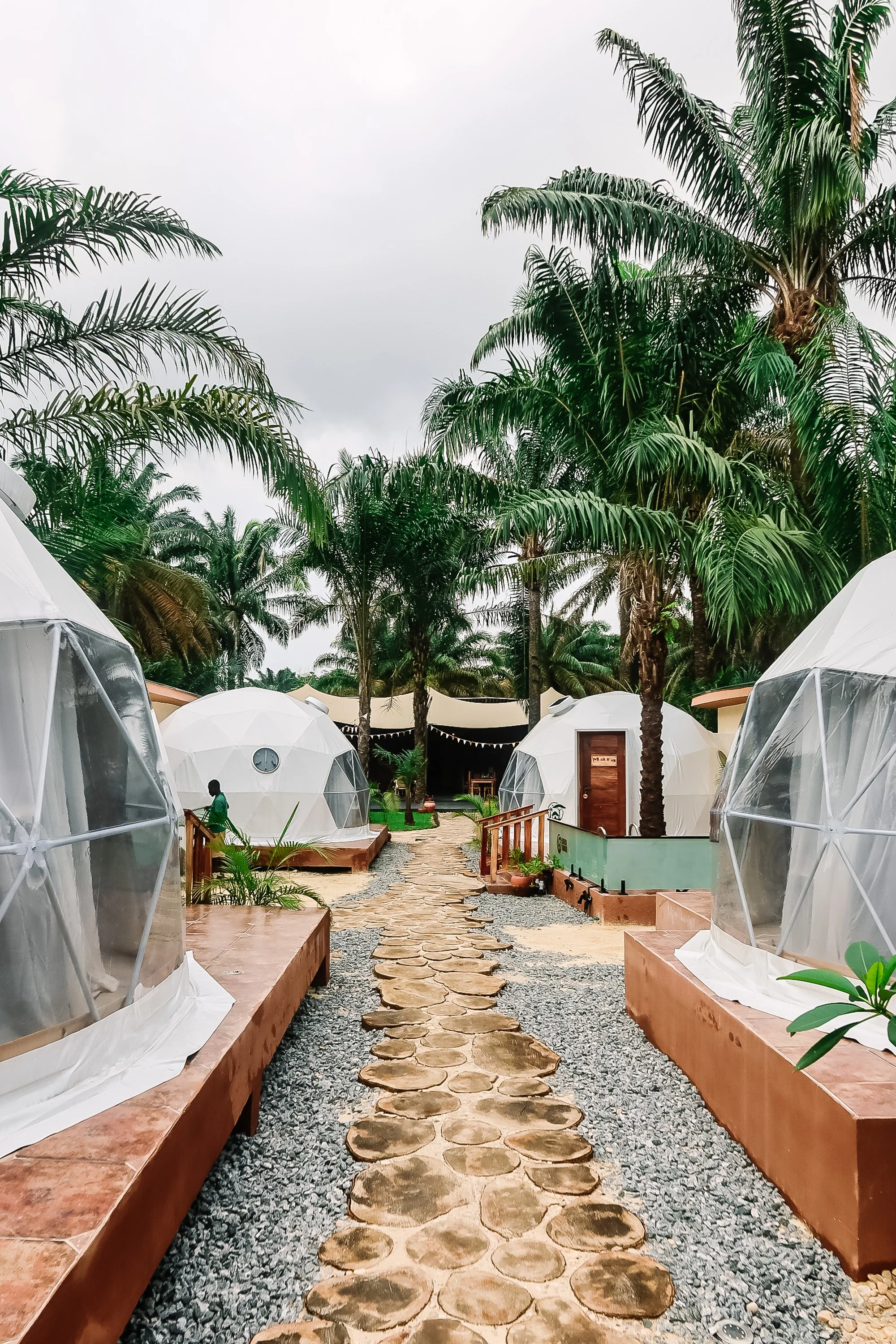
You grew from six rooms to 20, added Palma, the Gazebo, Conference Quay. Then Lufasi Lodges opened six geodomes in the forest, a different proposition altogether. From the outside it looks like steady expansion. From the inside, what's the actual decision-making process? When does a new offering get a green light, and what's the most recent idea you killed?
Millie: Our growth has always been strategic and in alignment with our ultimate goal which is to be the top destination for beach stays in Nigeria. We have remained curious and open to expansion but many places that offered us those opportunities ultimately didn’t make sense for us as a business. We are very swift to kill ideas that won’t work which is because we have the advantage of being a husband and wife team and the ability to therefore make quick decisions. Mark and I love camping and he’s suggested we go for it many times but there wasn’t the right time or location then. Until we came across Lufasi Park and it all came together for us as a concept. It’s almost spiritual but the green light for us is when we see an opportunity and feel a sense of connection to it.
Mark: That’s it, quite a few of our brands have come from opportunities that became too hard to ignore. The restaurant we operated in Lekki (Jollof by Jara) came as a result of guests enjoying our rice at the beach and wanting to enjoy it closer to home. The LCNL Academy grew from the restaurant having empty seats on weekday mornings and the Jara Beach Kitchen is an ad-hoc pop-up featuring at Food Events and to fulfil catering requirements.
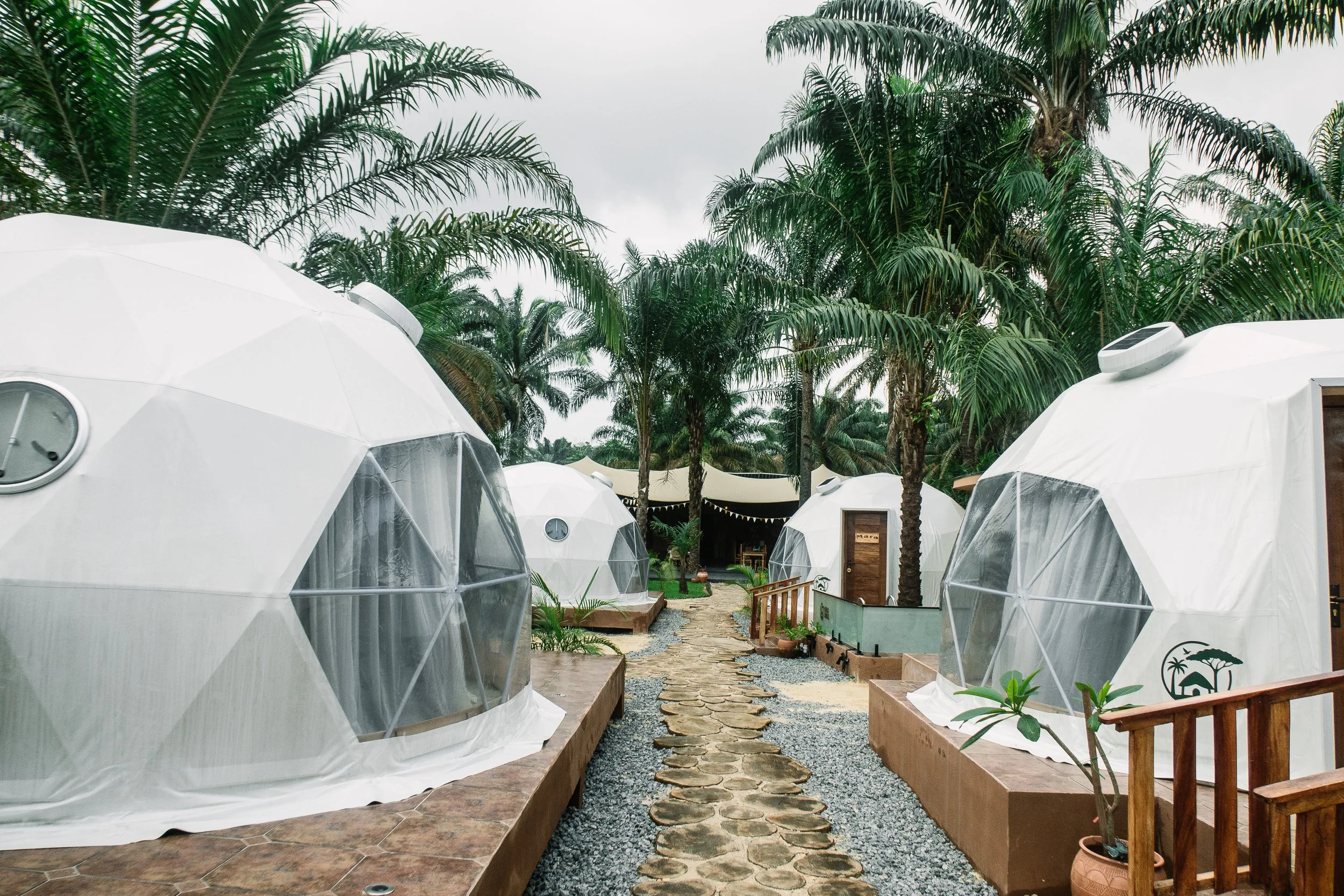
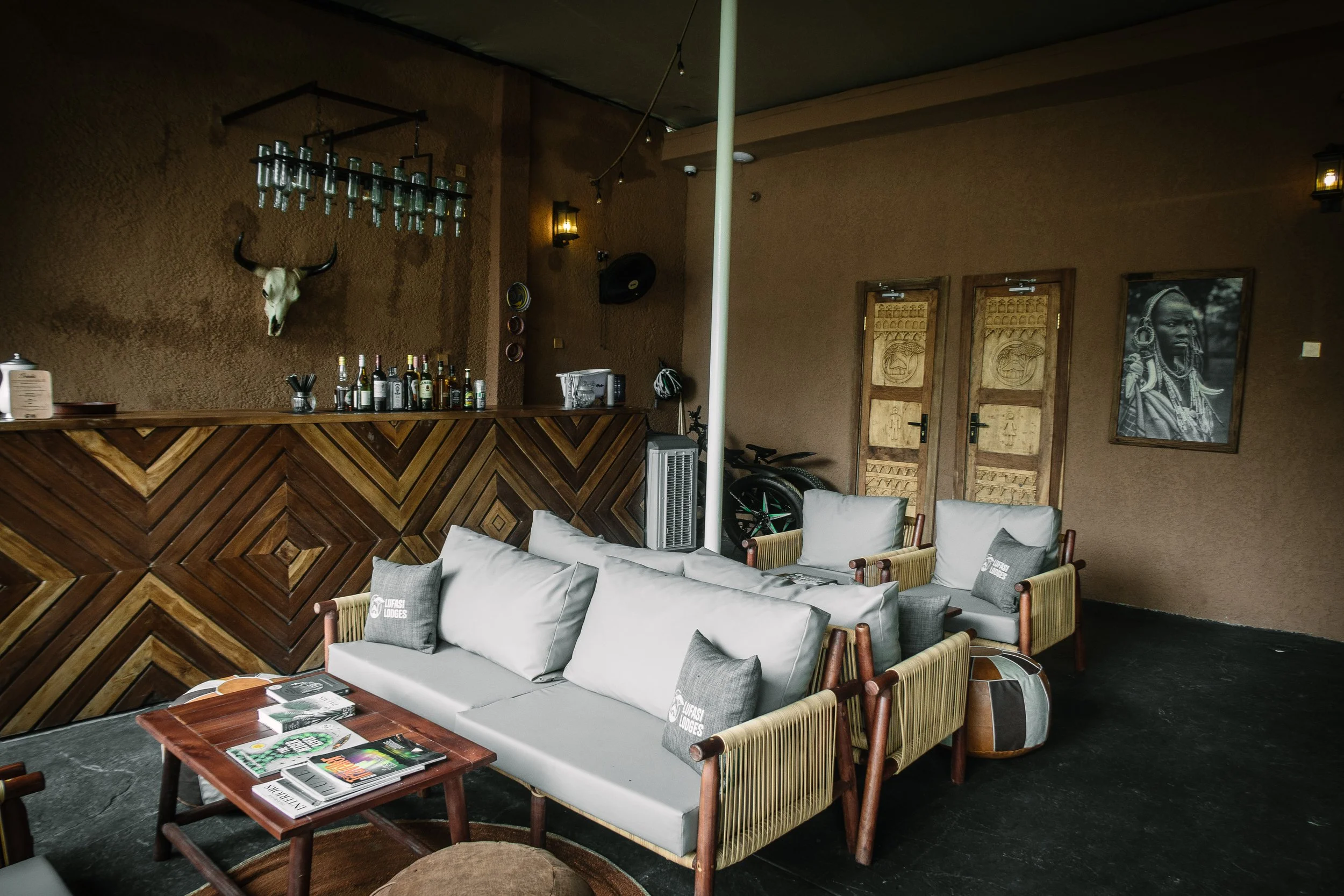
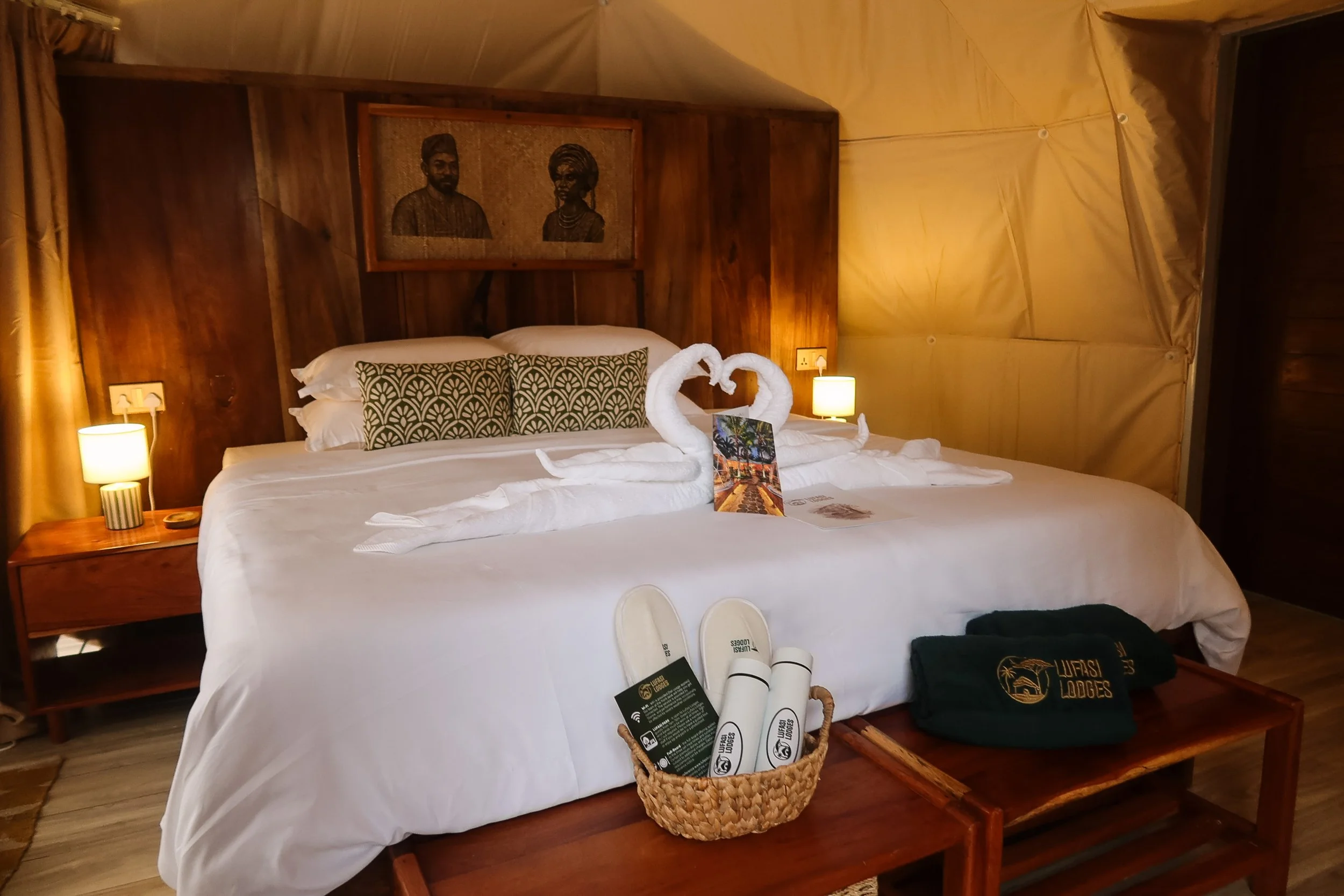
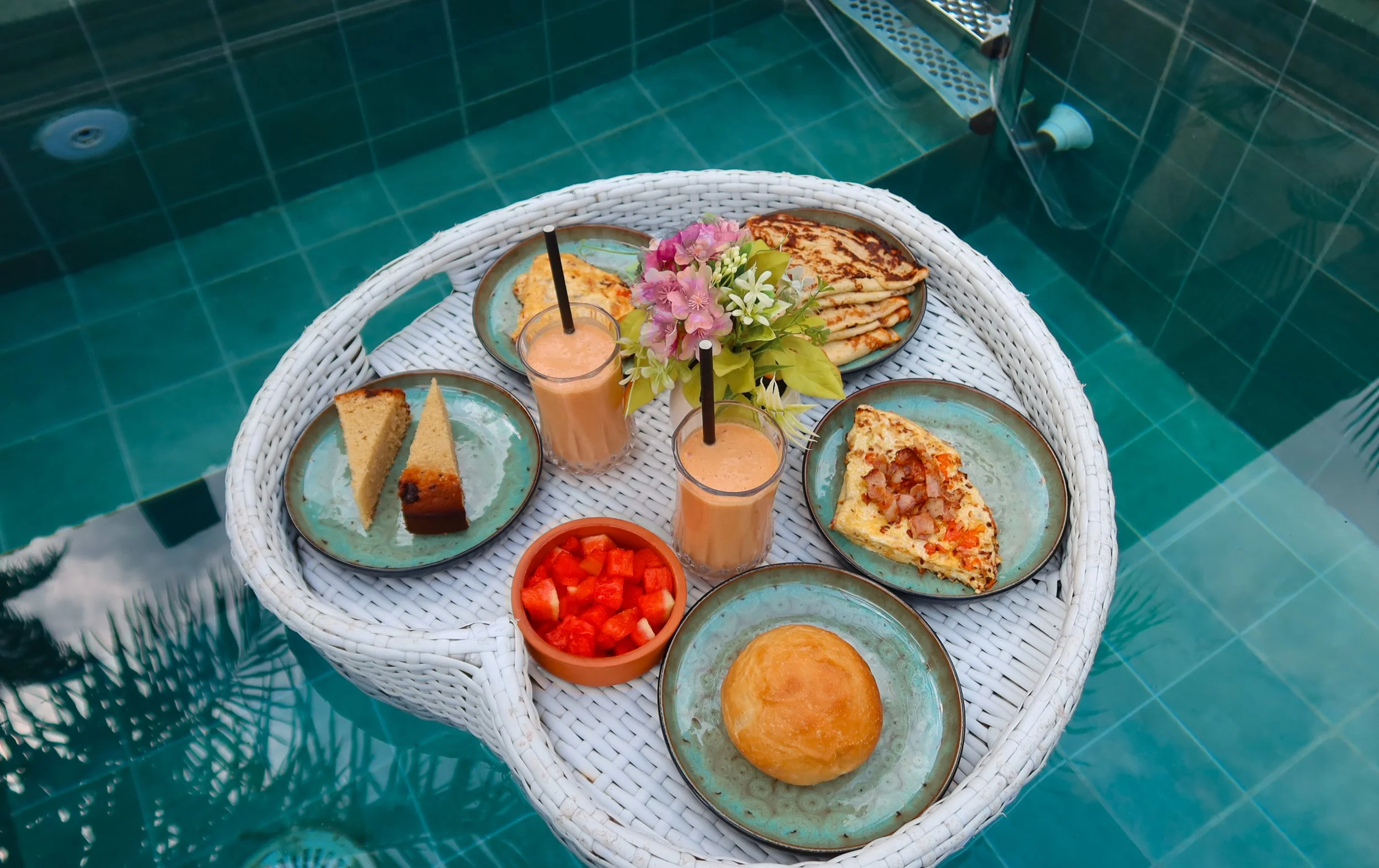
Lufasi is being positioned as a digital detox, a forest retreat, language that does a lot of cultural work in the West but has barely been tested with Nigerian travellers. Who is this for, and what made you confident there's a market for stillness in a country where most leisure traveling still feels celebratory?
Millie: Lufasi isn’t for everyone, and that’s okay. It’s for people who don’t need another loud weekend. It’s for people seeking rest, reflection, connection with nature and time to slow down. As Nigerians become more exposed to global travel trends and more aware of the importance of wellness, we’re seeing a growing appetite for experiences that restore rather than stimulate. We believe stillness is not a Western concept - it’s a human need.
Mark: There is always risk with any business - especially here! However, a little like Jara we created a place that we (and our family) would enjoy. Nigeria is not swamped with quality overnight experiences, hotels sure, but not out-of-the-box options. Lufasi Lodges provides an experience popular in other countries across Africa, right in the heart of Lagos. Feedback from guests so far has been exceptional. We’re incredibly proud - and excited - about Lufasi Lodges.
Jara turned six last November. Lufasi is its first true sibling, not an expansion of the same idea but a new one. When you look at the next six years, what kind of company do you want Little Company Nigeria to be, and is there a version of the future where Mark and Millie are still personally checking the linen, or one where you've stepped back enough to let it run without you?
Millie: Over the next six years, we see ourselves growing a collection of distinctive, nature-connected boutique stays that maintain a strong commitment to quality and sustainability.What excites us is not growth for growth’s sake. It’s creating experiences that are meaningful, well-designed and responsibly managed. Whether it’s a beach escape, a forest retreat or something entirely different, we want every property to have its own identity while sharing the same values and standards.
As for Mark and me, we’re not planning to retire anytime soon. Being hands-on has been a big part of our success. We believe one of the reasons we’ve been able to build a reputation for quality is because we’ve always been deeply involved in the details. Yes, there is a version of the future where the business can run without us being present every day, but there will probably never be a version where we stop caring about the linen, the guest experience or the little things that matter.
Mark: I agree - the only thing that really impacts our guest experience is our unwavering commitment to the details. I spend the majority of my time focusing on what needs fixing, or what doesn’t meet our standards, throughout every touchpoint.
Insider Intel
with Mark & Millie Slade
The grocery store you swear by when you're craving something specific from home: We get very lucky sometimes with some great international goodies at Renee supermarkets.
The Lagos restaurant you go to when you don't want to run into anybody: Lagos is a big city and a small town at the same time. We try to have dinner or lunch out a couple of times a month. We often favour takeaways for ease but shout-out to Woks and Koi, T-T, On-Z-Go, Leila’s and La Taverna!
The supplier or market that quietly makes Jara possible (and you'd happily out): We love working with local vendors and providing Nigerian made products. It’s a long list of suppliers but we’d say if we had to recommend one or two would be fresh from the farm produce from Mint Foods, Reel fruit snacks and Kokari coconut snacks we constantly have on our snack station. All of our bread comes from Cactus!
The place in Ibeju-Lekki most guests never find, that you'd send a close friend to: Definitely the Yemisi Shyllon museum. It’s incredible.
The one ingredient or product you stockpile every time you travel out: When we travel out we take ingredients for Jollof - our children love it. When coming back, usually chocolate!
A book, film, or album that captures the Nigeria you actually live in: Millie: I’m fresh off reading “how to get rid of ants” by Jesutomisin Ipinmoye and his stories capture so many different things that would be considered bizarre anywhere else but are very real to us here.
The dish at Jara the team eats off-the-clock that isn't on the guest menu:
Mark: I wish I had a more exciting answer, but the reality is everything I eat at either location is with our guests in mind. I’m often tweaking the ‘Big Mark’ Burger at Jara and just this week we’re excited to implement some more culinary experiences at Lufasi Lodges.